
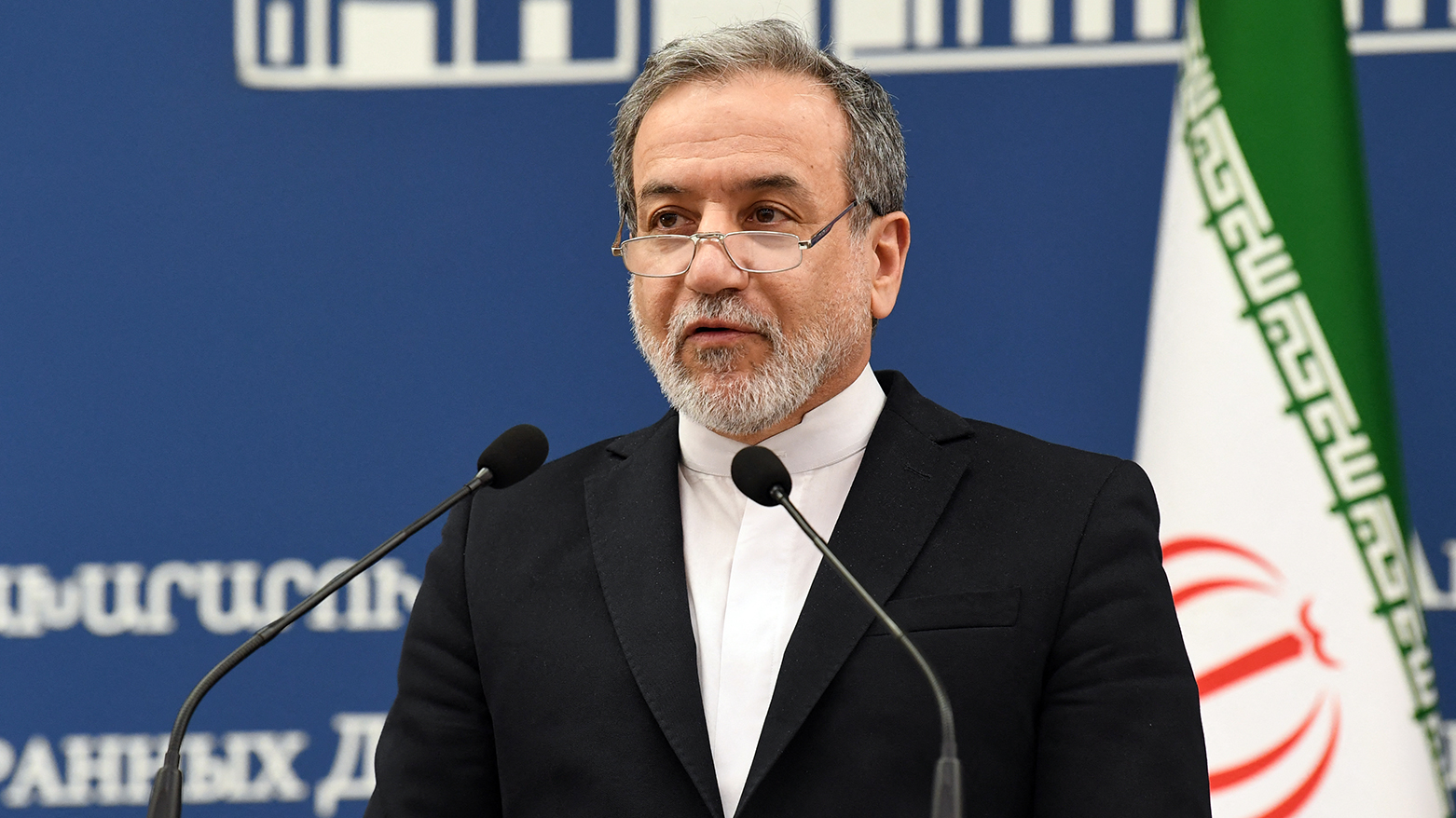
In modern geopolitics, wars are not fought only with missiles—they are also fought with words. At a time when West Asia is witnessing one of its most volatile phases, one man has emerged as the calm voice of Iran on the global stage: Abbas Araghchi.
While military tensions escalated between Iran and the United States, culminating recently in a temporary two-week ceasefire, it was not just battlefield strategies that mattered. It was diplomacy—and at the center of it stood Araghchi.
Why does this matter? Because in today’s world, the ability to negotiate, communicate, and shape global perception can be as decisive as military power.
From Battlefield to Diplomacy: The Early Life of Araghchi
Abbas Araghchi’s journey is not that of a conventional diplomat. It begins not in conference rooms, but on the battlefield.
Born in Isfahan into a modest family of carpet merchants, Araghchi faced personal loss early—his father passed away when he was just 17. The same year, Iran was going through a historic transformation during the Islamic Revolution.
As a young man, he joined the revolutionary movement and soon became part of Iran’s Revolutionary Guard. During the Iran–Iraq War, he spent nearly nine years on the front lines.
This phase shaped his understanding of conflict—not just as theory, but as lived experience.
Scholar of the West: Understanding the Adversary
After the war, Araghchi took a completely different path—education.
He pursued higher studies and eventually earned a PhD in political thought from the University of Kent in 1996. His research focused on how Islamic political systems could respond to Western democratic models.
This phase was crucial.
Unlike many policymakers, Araghchi did not just oppose the West—he studied it deeply. He understood its philosophy, negotiation style, and political behavior.
This combination of battlefield experience and academic insight gave him a rare advantage in diplomacy.
Rise in Diplomacy: Building Iran’s Global Engagement
Araghchi gradually moved into diplomacy, serving as:
- Ambassador to Finland
- Ambassador to Japan
His tenure in Japan was particularly significant. Despite geopolitical differences, he helped build strong bilateral relations, earning one of Japan’s highest honors—the Order of the Rising Sun.
This highlighted an important aspect of his personality:
👉 He was not just a negotiator with adversaries, but also a bridge-builder with unlikely partners.
The Nuclear Deal Years: Delivering the Impossible
Araghchi’s most defining role came during the negotiations of the Joint Comprehensive Plan of Action (JCPOA).
As a key member of Iran’s negotiation team under President Hassan Rouhani, he was deeply involved in the 2015 nuclear deal.
The agreement achieved something remarkable:
- Iran agreed to limit its nuclear program
- In return, international sanctions were lifted
This was a classic example of complex diplomacy—balancing national interest with global pressure.
However, the situation changed dramatically in 2018 when the United States withdrew from the agreement.
What Araghchi had helped build over years collapsed in a single political decision.
The Vienna Talks and Setback (2021)
In 2021, Araghchi once again led Iran’s efforts to revive the nuclear deal in Vienna.
Reports suggested that negotiations had reached an advanced stage and a draft agreement was nearly finalized. However, the deal was ultimately rejected by Iran’s leadership, and Araghchi was removed from his position.
This marked a major setback.
But it also revealed something important:
👉 In diplomacy, success is not only about negotiation—it is also about internal political approval.
Writing in Silence: When Diplomacy Turned into Thought
After being removed from negotiations in 2021, Abbas Araghchi did not disappear—he transformed his role.
Instead of negotiating at the global stage, he turned inward and began writing.
During this period, he authored two important books:
- A memoir based on his diplomatic experience in Japan
- A more analytical work titled Negotiations: The Power of Diplomacy
In this book, Araghchi did something unusual—he systematized diplomacy.
He explained:
- Core principles of negotiation
- Techniques used in high-stakes diplomatic talks
- The role of culture in shaping negotiation outcomes
- His personal experiences from nuclear negotiations with major global powers
What makes this phase remarkable is the contradiction it represents:
👉 He was writing about diplomacy while being excluded from it
👉 He was analyzing negotiations while being kept away from the negotiation table
Yet, this period was not a decline—it was preparation.
When he eventually returned to power as Foreign Minister, he did not just bring experience—he brought a refined understanding of diplomacy itself.
In a way, while others were practicing diplomacy, Araghchi was studying it more deeply than anyone else.
And when the system needed someone capable of handling crisis negotiations again, the same man was called back.
Return as Foreign Minister: Leadership During Crisis
A few years later, Araghchi returned—this time as Iran’s Foreign Minister.
But the context had changed completely.
Iran was now facing intense conflict, targeted strikes, and internal instability. Several senior officials were reportedly eliminated in a short span, creating a leadership vacuum.
In this chaotic environment, Araghchi emerged as the main international voice of Iran.
While others disappeared from the public sphere, he:
- Gave interviews to global media
- Communicated Iran’s position clearly
- Maintained a calm and composed tone
Diplomacy in War: Words as Strategic Tools
One of the most striking aspects of Araghchi’s leadership has been his communication strategy.
While Iran responded militarily on the ground, Araghchi responded diplomatically on the global stage.
He emphasized key messages:
- Iran’s system is institutional, not dependent on one individual
- The United States is responsible for escalation
- Iran’s political structure is resilient
These statements were not just rhetoric—they were strategic.
👉 They aimed to influence global perception, shape international opinion, and justify Iran’s position.
In modern geopolitics, this “battle of narratives” is as important as military action.
The Recent Ceasefire: Diplomacy at Work
The recent two-week ceasefire between Iran and the United States highlights the continued importance of diplomacy even during active conflict.
While multiple actors are involved, Araghchi has been seen as a key figure capable of keeping communication channels open.
This reinforces a critical idea:
👉 Even in war, there must always be someone who can negotiate.
Analysis: What Does Araghchi Represent?
1. Hybrid Leadership
Araghchi represents a rare combination:
- Soldier
- Scholar
- Diplomat
This allows him to understand both conflict and negotiation deeply.
2. Power of Strategic Communication
His calm and structured communication shows how narratives shape global opinion.
3. Limits of Diplomacy
Despite his efforts, outcomes depend on:
- Domestic politics
- Leadership decisions
- International power dynamics
India’s Perspective (VERY IMPORTANT)
For India, developments involving Iran and the United States have direct implications:
- Energy Security: Iran is a key potential oil supplier
- Connectivity Projects: Projects like Chabahar Port depend on stable Iran relations
- Strategic Balance: India must balance relations with both Iran and the US
Figures like Araghchi matter because they influence whether tensions escalate or stabilize.
Conclusion
Abbas Araghchi’s journey—from a young soldier in war to the face of Iran’s diplomacy—reflects the evolving nature of global politics.
In a world driven by both power and perception, his role shows that diplomacy is not weakness—it is strategy.
👉 Final Takeaway: In modern geopolitics, those who control the narrative often shape the outcome as much as those who control the battlefield.
UPSC / MPSC Relevance
GS Paper II: International Relations
GS Paper IV: Ethics (Leadership under crisis)
Essay Topics:
- Role of diplomacy in modern conflicts
- Power of narrative in global politics
Political Science By Shahaji Sir